

Biohacking for Peak Performance.
Every membership begins with a measurement. Your VO₂ Max Performance Evaluation gives us the baseline, then we build a protocol around your biology. Not a gym. A protocol.
You do not need to know which machine.
Most people arrive with a symptom rather than a shopping list. Tell us what you have noticed and we will work backwards to the measurement, and then to the protocol.
Performance & Capacity
Stamina That Fades
You used to have more in the tank. Oxygen delivery and utilization are measurable, and they respond to training.
ExploreRecovery That Takes Too Long
Sessions that used to cost you a day now cost you three. Circulation, inflammation, and sleep all sit underneath that.
ExploreEnergy That Runs Out
Fatigue that sleep does not fix is usually a cellular question rather than a willpower one.
ExploreWeight That Will Not Move
The scale hides what actually changed. Lean mass and fat mass frequently move in opposite directions.
ExploreOutput That Has Plateaued
Training harder stops working at some point. Knowing your actual zones is usually what breaks the ceiling.
ExploreSpecific Situations
Focus and Mental Clarity
The research here concentrates on oxygen, and it is some of the better controlled work in the facility.
ExploreA Problem That Will Not Settle
A specific area that has not resolved with time and loading. Targeted rather than systemic.
ExploreGetting Back After Surgery
Your surgeon leads. We support, within the limits they set, on a defined six week structure.
ExploreStaying Ahead of Decline
Cardiorespiratory fitness is among the strongest predictors of how long people live, and it is modifiable.
ExploreNo Time, High Stakes
Twelve weeks, physician led, built for people whose calendar is the binding constraint.
ExploreNot Close Enough To Visit
Weight, hormones and metabolic health can be evaluated and treated remotely, physician led, across all fifty states.
ExploreThe Longevity Systems.
Every member receives a personalized prescription across the domains, each with its own modalities and its own measured KPIs.

Oxygen System
Improve oxygen delivery, extraction, and utilization.

Mitochondrial System
Increase ATP production and metabolic flexibility.
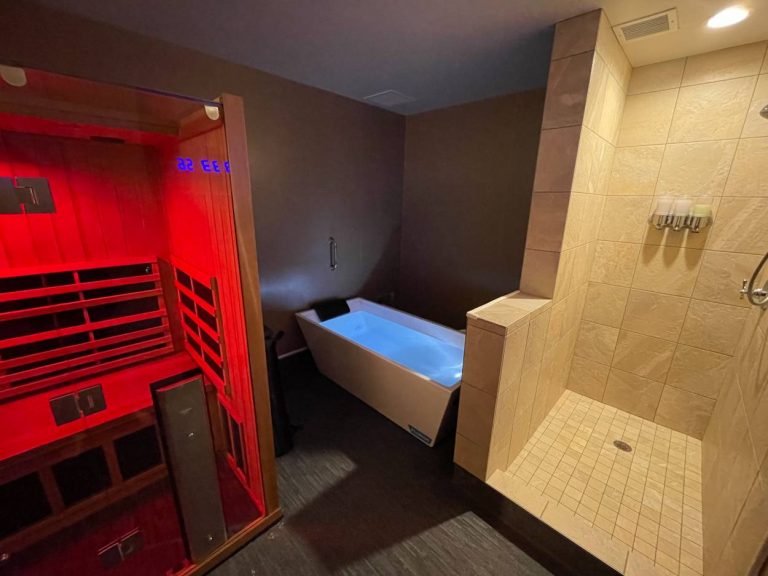
Recovery System
Reduce inflammation while accelerating repair.

Performance System
Build cardiovascular fitness and resilience.
Some of this works from anywhere.
Everything above happens in the building. These do not. Physician evaluated, prescribed where appropriate, and available across all fifty states.
Metabolic
Weight, appetite and glucose handling as one system rather than three problems.
ExploreHormone
Diagnosed on bloodwork and symptoms together, never symptoms alone.
ExploreCellular
Support beneath the symptom, with the evidence stated honestly.
ExploreSleep
Home based apnoea testing. Causes addressed before sedation.
ExploreSkin & Hair
Cause identified rather than assumed. Timing decides the outcome.
ExploreDaily Support
Targeted where deficiency is documented. Declined where it is not.
ExploreDelivered by our partnered telehealth practice. Longevity Gyms does not prescribe medication, and your clinical relationship sits with them.
Explore Vitality →Everything that can be prescribed.
Physician evaluated, delivered to your door, and available whether or not you can reach Hanover. Nothing here is selected from a menu.
Semaglutide
Tirzepatide
Compounded Semaglutide
Compounded Tirzepatide
Microdosing
Testosterone Cypionate
Testosterone Enanthate
Testosterone Gel
Clomiphene Citrate
Estradiol Tablet
Estradiol Patch
Progesterone
Sildenafil
Tadalafil
NAD+
Sermorelin
B12-MIC
L-Carnitine
Lipo-C
Glutathione
Methylene Blue
Finasteride + Minoxidil
Finasteride + Minoxidil
Low Dose Minoxidil
Tretinoin
Acne Treatment
Sleep Apnoea Testing
Whole Health Panel
These are prescription therapies. Which if any is appropriate is decided by a licensed physician following evaluation. Compounded medications are not evaluated or approved by the FDA. Availability varies by state.
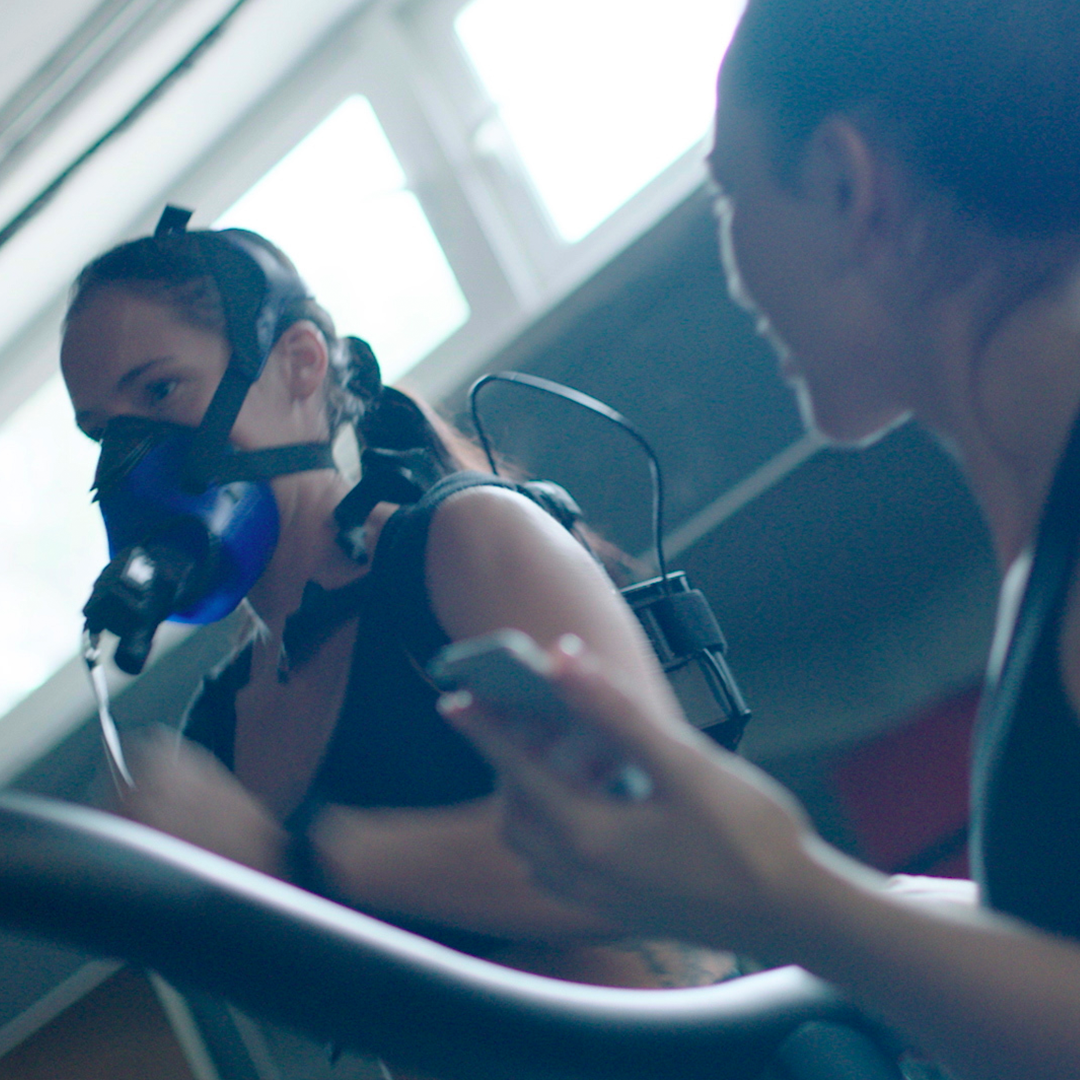
Your VO₂ Max Tells Us Everything.
VO₂ Max is the maximum rate your body can consume oxygen, and one of the strongest predictors of long term health in the medical literature. Before any recommendation, we measure where you actually are, at rest and at your ceiling.
Measure First. Then Prescribe.
Every protocol here is built on numbers rather than assumptions. We establish where you actually stand, then retest so you can see whether it worked.

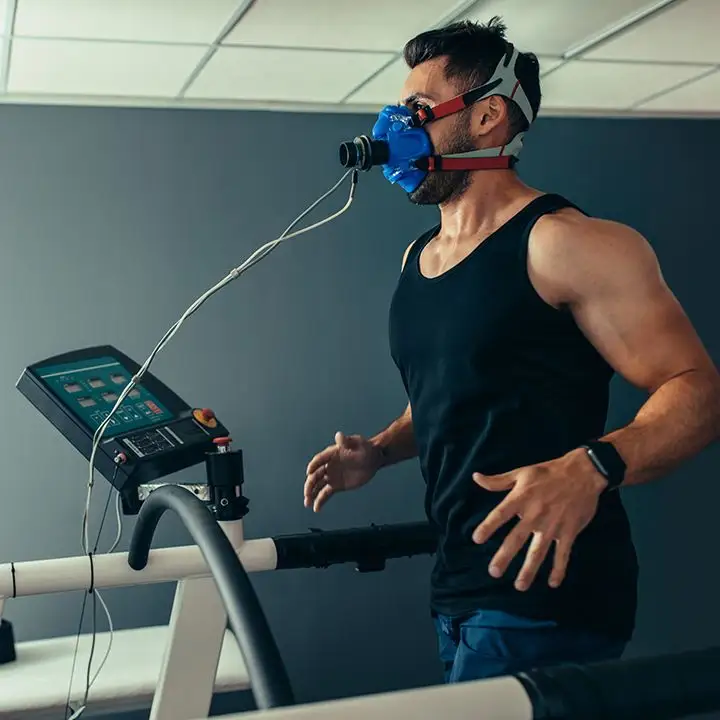
VO₂ Max Testing
Measures the maximum oxygen your body can take in and use under effort. One of the most studied markers of cardiorespiratory fitness, and the number most performance protocols are built from.

InBody Scan
Segmental analysis of lean mass, body fat, and hydration. Measured rather than estimated, and repeated through your protocol so change is tracked precisely.
Comprehensive Panel
Metabolic, lipid, inflammatory, thyroid, and organ markers, interpreted rather than handed over.
Hormone Assessment
A full hormonal picture, reviewed against your symptoms, goals, and history.
Biological Age
How your body is ageing relative to the calendar, measured rather than guessed at.
Genomic Insight
What your genetics suggest about risk, response, and where to focus first.
Every Modality. One Protocol.
The tools your protocol draws from. Which ones you use, in what sequence, and how often is determined by your evaluation data.


Built Around Circuits.
A Circuit is a single guided session that moves you through a sequence of modalities chosen for your protocol. Your tier decides how many Circuits you receive each month, along with your testing cadence, scheduling priority, and level of recovery and performance access.
- Each Circuit is sequenced by your advisor, so the modalities work together rather than in isolation.
- Body composition and performance testing repeat on a set cadence, so progress is measured, not assumed.
- Higher tiers add scheduling priority, physician review, and concierge coordination.
Goal Setting
Tell us what matters, whether longevity, performance, weight management, or recovery. Your goal frames the protocol.
Performance Evaluation
We measure cardiovascular baseline, metabolic rate, body composition, and lactate threshold in 60 minutes.
Data and Reporting
Your advisor reviews every metric and finds the highest leverage opportunities for your biology.
Begin and Track
Your protocol starts. Every Circuit is logged, and re-evaluations show how your biology responds over time.
Choose Your Protocol.
Every membership begins with a Performance Evaluation and delivers a personalized prescription across every system. Flat monthly pricing, freeze anytime.
- 4 Circuits / month
- Body Composition (Quarterly)
- Standard Scheduling
- Longevity Events Included
- Foundational Recovery & Performance Access
- 10 Circuits / month
- Body Composition (Monthly)
- Priority Scheduling
- Longevity Events Included
- Expanded Recovery & Performance Access
- Enhanced Performance Testing (Discounted)
- 16 Circuits / month
- Body Composition (Monthly)
- Concierge Scheduling
- Longevity Events (VIP)
- Premium Recovery & Performance Access
- Advanced Performance Testing Included
- HBOT Credits, VO₂ Max & Lactate Testing
- Motion Analysis (2x / year)

All tiers begin with a Performance Evaluation. Memberships can be frozen anytime. Split membership options are available on request.
Not a Gym. Not a Spa. A Protocol.
Most places optimize for a workout or an hour of relaxation. We optimize for what is measurably happening inside your body.
- No physician oversight
- Rarely measured
- Generic training plans
- Limited recovery options
- Progress self reported
- Physician guided from day one
- Starts with measurement, every time
- Built around your goal, not a template
- The full collective under one roof
- Progress retested over time
- No clinical oversight
- No measurement
- A menu of services
- Relaxation focused
- No progress tracking

Where Athletes Are Built and Champions Are Made.
Longevity Gyms is a physician guided performance and recovery facility for people who take their results seriously, from competitive athletes to anyone determined to stay in the game. The work starts with measurement, not membership: we find out what is actually happening inside your body before we prescribe a single session.
We operate as the performance arm of the Institute for Human Optimization, founded by Anil Bajnath, MD, in Hanover, Maryland, a short drive from BWI. Your first visit is a VO₂ Max Performance Evaluation. From that baseline we build a protocol matched to your physiology and your goals, then we retest, so progress is something you can see rather than assume.
The full collective sits under one roof here, and each one earns its place through published research. We cite that research openly on every service page. If a therapy cannot show its mechanism, we do not offer it.
Measured First
Every protocol starts with data
Physician Powered
Founded by Anil Bajnath, MD
Built Around You
One to one guided protocols
Good to Know.
The answers members ask for most. Still curious about something? Our team is a call away.
Call 410-858-4086 →What makes Longevity Gyms different from a regular gym?
Personalization and data. A regular gym gives everyone the same experience. Your protocol is built around your biology, goals, and health history, starting from your VO₂ Max Performance Evaluation rather than a template.
What is a Circuit?
A Circuit is a single guided session that moves you through a sequence of modalities chosen for your protocol. Your membership tier sets how many Circuits you receive each month.
What happens at the Performance Evaluation?
In 60 minutes we measure your VO₂ Max, lactate threshold, resting metabolic rate, and body composition, without needles or bloodwork. Those numbers become the baseline your protocol is built from.
Do I need to be fit to start?
No. Most modalities require no physical exertion. Vasper and EWOT involve movement but adjust to any fitness level. Our team screens every client before their first session.
Can I freeze my membership?
Yes. Memberships can be frozen when you travel or need a break, so you never pay for Circuits you cannot use.
Where are you located?
7030 Hi Tech Dr, Suite 102, Hanover, MD 21076, near BWI Airport and accessible from Baltimore, Columbia, and Annapolis. Call 410-858-4086 to book.
Reserve Your Consultation.
Every membership begins with a physician guided Performance Evaluation. Reserve yours to secure a place and start with your baseline.
Hanover, MD 21076 · near BWI
Sat: by appointment
Annapolis · BWI
What are you actually here to change?
Pick the one closest to the truth and we will take you to the part worth reading, rather than leaving you to work out which of fifty pages applies to you.
Not sure? Most people are not. All three start with the same measurement anyway.